AUTHOR’S NOTE: I have a number of new spreads stacked up that have taken a back seat to other projects. For the next few days I will posting them exclusively unless something else intervenes.
In his book, Etteilla or the Only Way to Draw the Cards, Jean-Baptiste Alliette described what he called the “Etteilla Draw,” an additional row of cards appended to what was already a lengthy spread. As far as I can recall, he didn’t mention anything that would strongly differentiate these cards from the rest beyond being just another set of data. But the concept started me thinking in a useful direction.
Although we may not consciously recognize it, almost every situational-development reading breaks down into three elements: a “situational factors” component, a “querent’s action/reaction” component and a “developmental progress” or “bottom line” competent. It often mirrors the “thesis, antithesis and synthesis” argument of the “Hegelian Dialectic:” the “thesis” is reflected in the projected course of the situation if no intervention occurs; the “antithesis” conveys what might be done by the querent to change its trajectory if necessary (call it “the other side of the story”); and the “synthesis” affords a view of what will most likely result when the two are brought together.
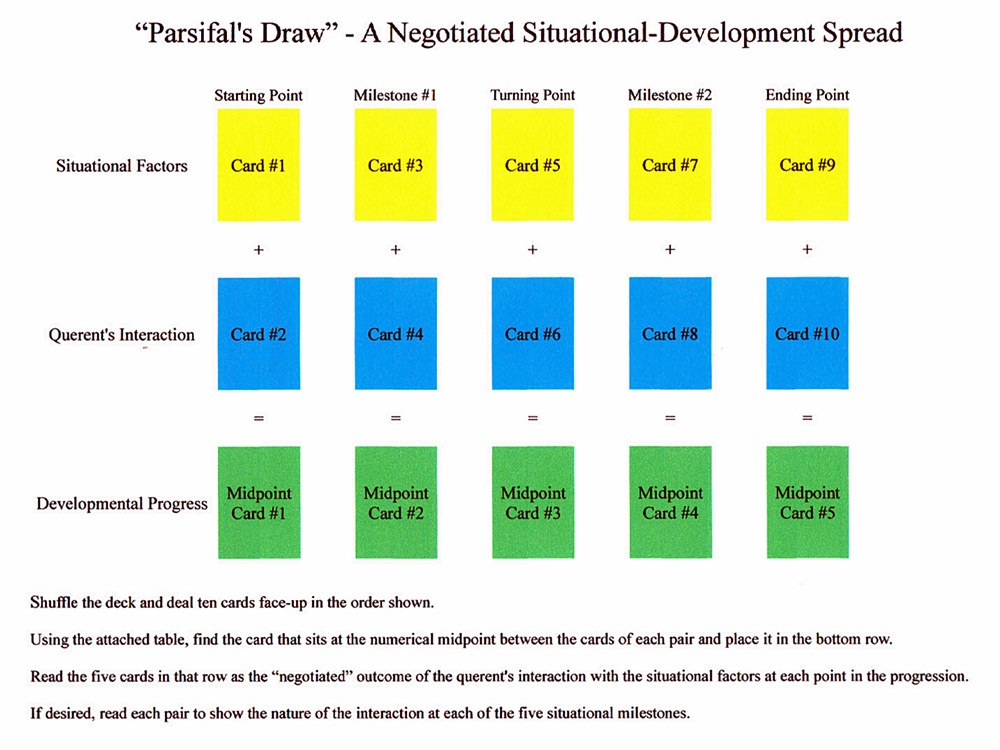
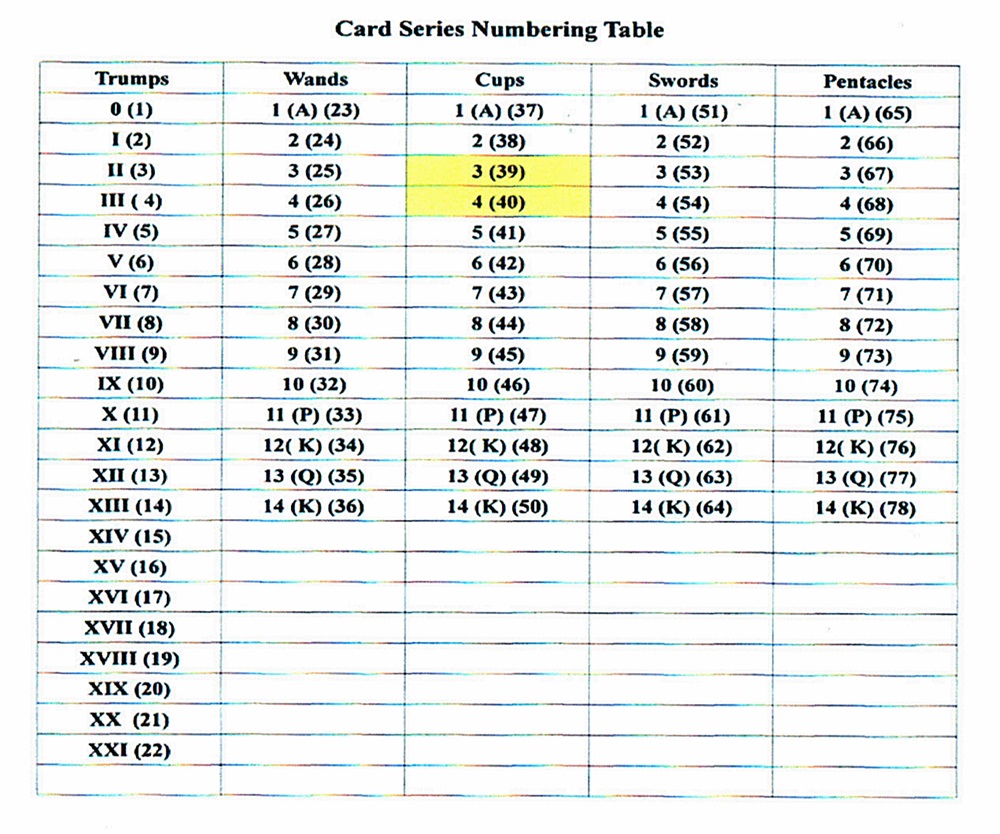
I came up with the idea of breaking these often-merged factors into discrete rows of cards that can then be examined with an eye to their individual and combined contribution to the “Hegelian” model. I’ve named it the “Parsifal’s Draw.” It uses the numerical midpoint between two randomly-drawn cards in each of five sets to provide a “negotiated” outcome card for the interaction of the querent with the situation at each milestone in the progression.
 Parsifal's Wheel Tarot & Astrology