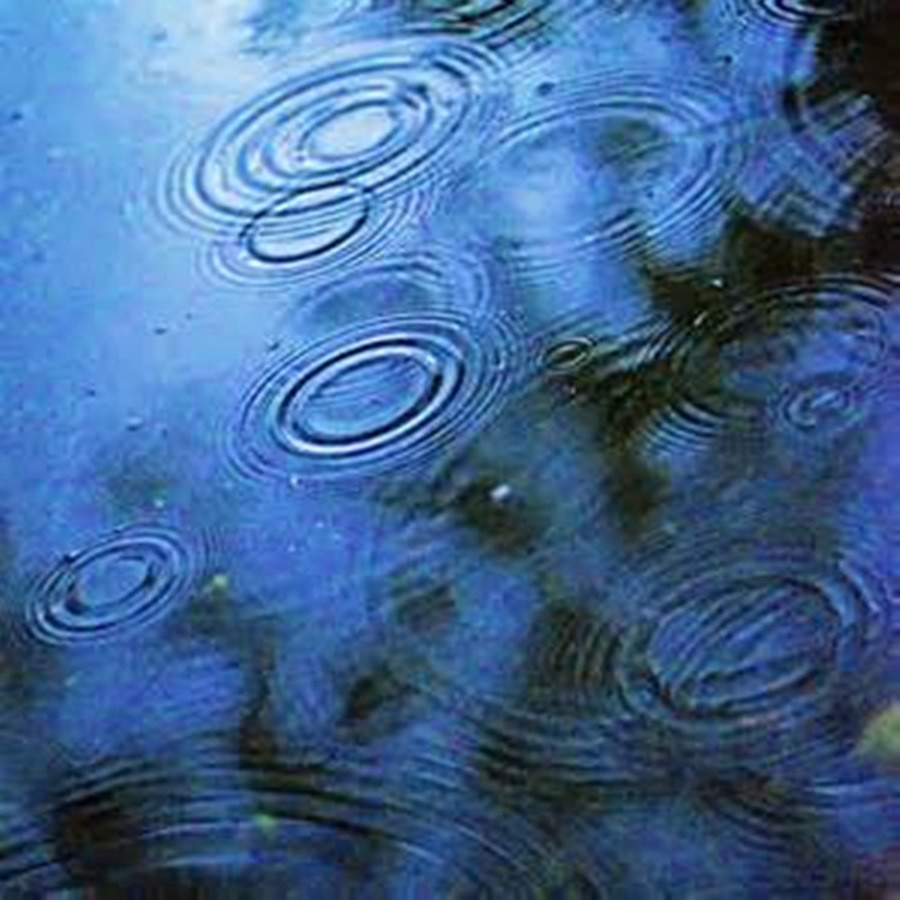
AUTHOR’S NOTE: All too often, the random appearance of a trump card in a tarot reading about a commonplace subject feels like a giant rock has been tossed into the middle of a placid pond when a drop of rain or two would have been sufficient to stir the water to a depth that churns up relevant insights. The numbered “small” cards can represent these droplets while the court cards might be viewed as the atmospheric variables by which they are delivered.
In Tarot Architect, Lon Milo DuQuette makes a cogent observation about this fact, professing to be:
“. . . relieved when cards of the Lesser Arcana appear in the spread. Unlike great cosmic concepts and karmic profundities the Trumps often suggest, these fifty-six cards of the Lesser Arcana frequently offer candid objective insights pertinent to everyday questions or issues.”
Precisely. When regarded as an archetypal pinnacle of spiritual wisdom (although I know some Tarot de Marseille readers don’t see it that way), a trump card can come across as overly intense for the situation at hand because it vibrates at a much higher or lower frequency than the rest of the cards. Its pitch is either unnecessarily shrill or too basso profundo for the overall tone of the reading. I recognized this dilemma a long time ago, and my favorite way to deal with it is to leave the trump cards out of the shuffle entirely when I know that the topic exhibits little likelihood of accelerating into a major event. This works well enough for most practical purposes.
But a better way would be to think a little more deeply about the rarefied mystique of the Major Arcana and “de-tune” their oscillation to match speeds with the more routine circumstances conveyed by the other cards in the spread. This isn’t as difficult as it sounds as long as we dispense with the exalted rhetoric and bring the narrative down-to-earth; that is, disregard the yawning chasm between archetype and reality and just treat the reading as being “all of a piece.” Enlisting the sitter’s help in sorting this out is a reasonable approach to downsizing an overwrought trump card’s footprint by adjusting its posture so it “plays nice” within the context of the question.
Once again, I’ll insist that we as professional diviners must earn our fee by making sense of this scrambled scenario. As Graham Chapman (playing a stuffy Shakespearean actor in an obscure Monty Python sketch) replied when asked by an interviewer how he managed to keep his lines straight: “The words are there already, all one has to do is get them in the right order.” In a tarot reading, this means judiciously modulating the voice of each card in its position so it exerts neither too much nor too little influence on the evolving story-line.
There’s no point in hyperventilating over a traditionally dire trump card like the Tower when the situation as a whole clearly doesn’t lend itself to such histrionics. Long experience has taught me that it’s preferable to understate rather than overstate the potential because it rarely manifests in its most dramatic form. This doesn’t mean soft-peddling (as in “soft-selling,” nothing to do with pianos or bicycles) any threat of upset or crowing over any as-yet-unrealized victory; its goal is to keep things in perspective, perhaps with a nod toward the possibility for good or ill but certainly not inevitability in either case. While tarot can deal effectively with emerging trends, tendencies and probabilities, it is seldom on firm ground with ironclad certainties. It is always a better strategy to be cautious and measured in our observations than to overreach with a prediction and be proven wrong.
I’ve come to the point in my thinking where every trump card represents a broad overarching theme or environmental backdrop and is rarely a critical show-stopper within the scope of a reading in which it appears. This is nowhere more obvious than in forecasts about routine, day-to-day affairs, those that seldom escalate into the kind of significant events typically ascribed to the Major Arcana by contemporary writers. I simply haven’t seen it happen often enough over the years to have confidence in the merit of the assumption. So if I’m going to press them into a more specific role in the narrative, I believe I must find a suitably prosaic definition for each of them. This seems to be a matter of scaling back expectations for their mundane impact that will align them more closely with the rest of the cards and the evidence gained from decades of practice. They can, of course, still set the stage and create the environment for more important developments, but I view this as a passive rather than an active contribution to an outcome that is largely determined by their more utilitarian implications. Philosophers and psychologists can have the archetypal bounty; in most situations I’ll take the “small change.”
 Parsifal's Wheel Tarot & Astrology