AUTHOR’S NOTE: When I published my Tarot de Marseille guide a couple of years ago, my grasp of the traditional symbolism in the TdM trump cards was only moderate, so for those cards I felt compelled to fall back on the metaphysical assumptions with which I’m most familiar. But I’ve always had reservations about this stopgap measure despite the fact that there is no profound historical basis for use of the TdM in divination that might have replaced it.
Since that time a few things have changed to correct the perceived misapplication: I’ve been communicating with the experts on the Tarot History Facebook page and tapping their wealth of experience, I’ve been working more diligently with the tirage en croix (French Cross) spread, and I had an epiphany about the dubious psychological merit of tarot reading in general and the absence of specific major events and circumstances attending the appearance of trump cards in a spread. The dialogue sharpened my instincts, and in my predictive approach I began construing the trumps as the prevailing theme or environmental backdrop for the mundane conditions shown by the pips and court cards. I realized that a more traditional “fortune-telling” approach to interpretation would make psychological or philosophical treatment of the trumps moot when exploring the kind of practical matters for which the TdM is best suited .
Here is a miscellaneous collection of rudimentary “one-liners” for each of the 22 trumps that captures my current thinking on their divinatory meaning. Many are standard but some will have to be vetted more thoroughly in practice, and I expect they will grow a little since my only purpose at this point is to set the tone for each one (although with La Maison Dieu I couldn’t resist having a little fun). Once again, thanks to Shell David for allowing me to use images from his personal Noblet TdM for online publication.
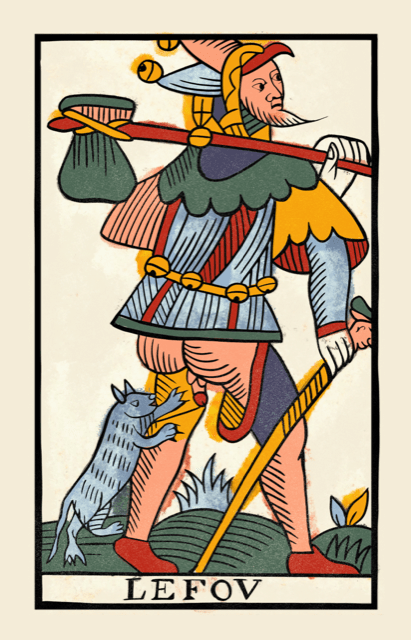
Le Fou: A feckless vagabond; lack of focus, purpose and direction but also the freedom not to care.
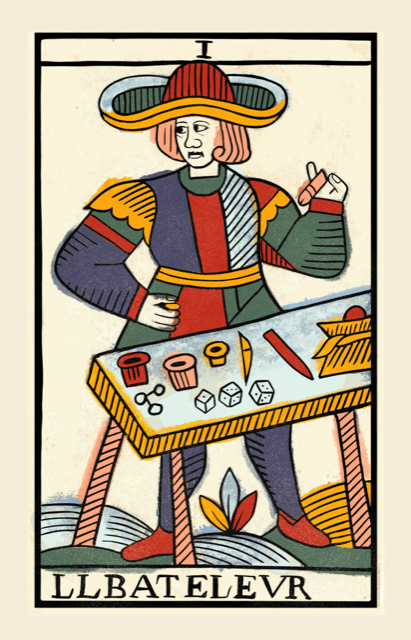
Le Bateleur: A stage magician and mountebank (sleight-of-hand trickster); cleverness and deception combined; unprincipled opportunism.
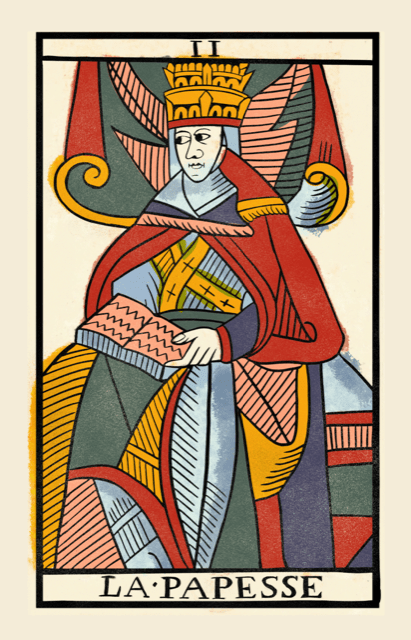
La Papesse: Veiled wisdom; extraordinary insight; surrender to inner truth.
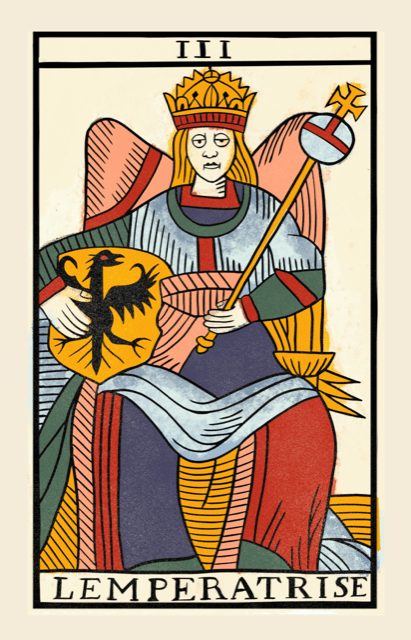
L’Emperatrise: Domesticity; firmness and fairness; the “Power Behind the Throne;” noblesse oblige; “Mommy” in all her disguises.

L’Empereur: Authoritarianism; force of Will; Divine Right of Kings; La Pape’s accomplice; “Daddy” in all his disguises.
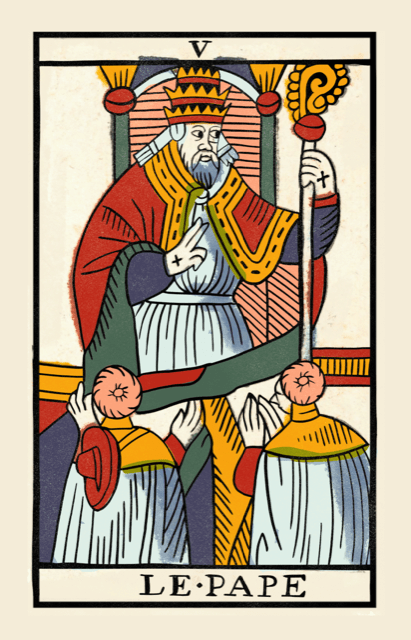
Le Pape: Orthodoxy; intrusion of accepted norms; Mandate of Heaven; L’Empereur’s accomplice; the “agents of faith” in all their disguises.
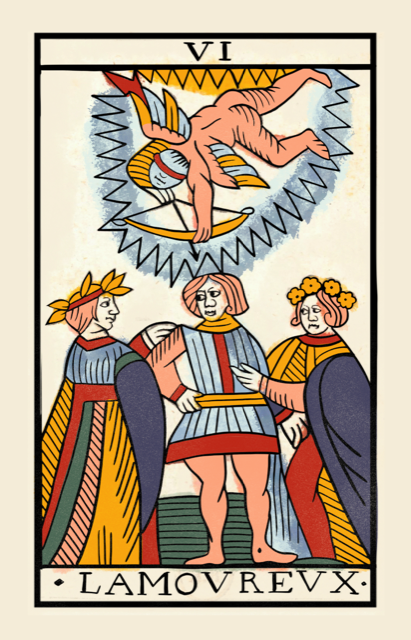
L’Amoureux: Indecision; an untenable situation requiring exquisite finesse to escape in one piece.

Le Chariot: Victory; decisive movement toward a goal.

Justice: Accountability; receiving what has been earned, nothing more nor less.
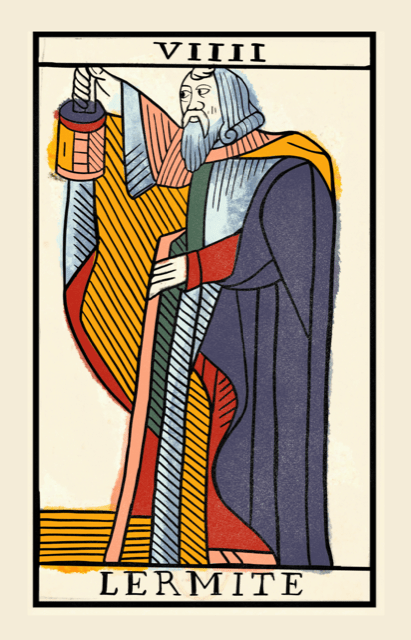
L’Ermite: Solitude; reflection; sagacity in private matters.

La Roue de Fortune: Generally favorable circumstances brought on by change.

Force: Exceptional courage; “true grit;” a winning hand.
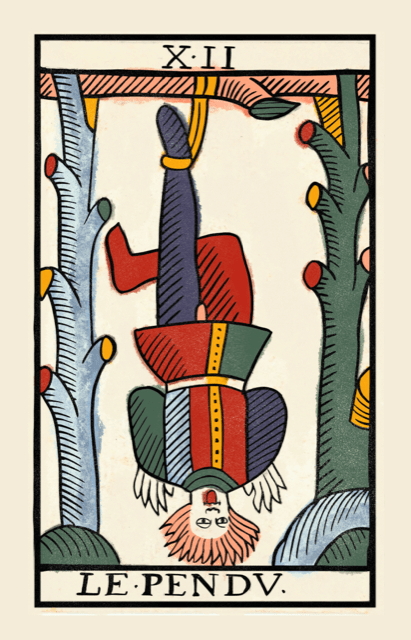
Le Pendu: Arrested activity; delayed judgment; “Death’s anteroom” (or one foot in the “Great Beyond”); giving up something to get something.

La Mort: Inevitability and finality; the end awaits.

Le Temperance: Balanced force, judiciously applied to matters requiring a delicate touch.
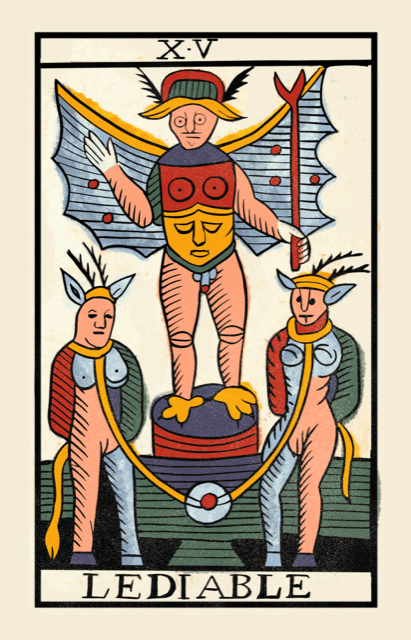
Le Diable: Error of judgment; temptation; enticements not to be trusted.
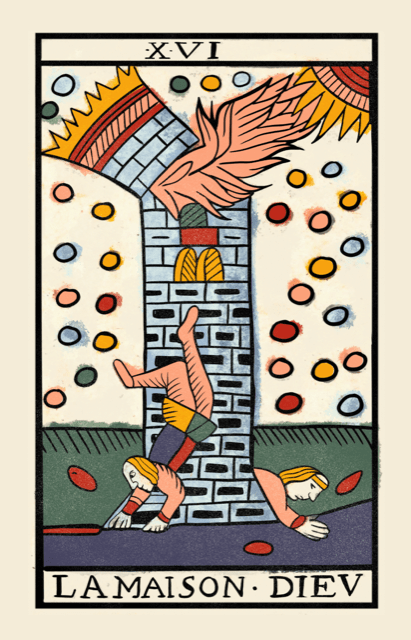
La Maison Dieu: The consequences of hubris; “pride goeth before a fall;” the Devil’s comeuppance; “Jack and Jill meet God, and boy, is he p . . . ” (no, scratch that last one).
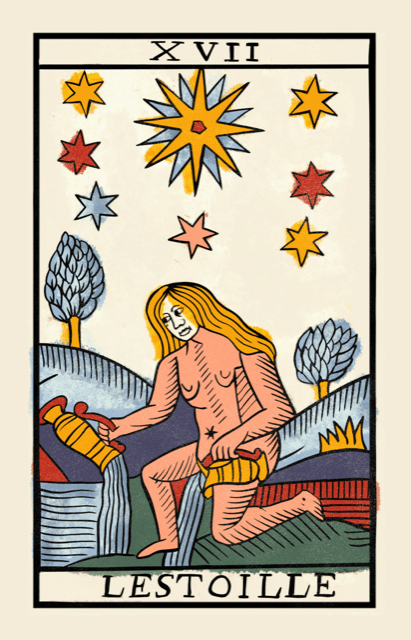
L’Estoille: Serenity; the bounty of heaven, even-handed dispensation of Divine largess.
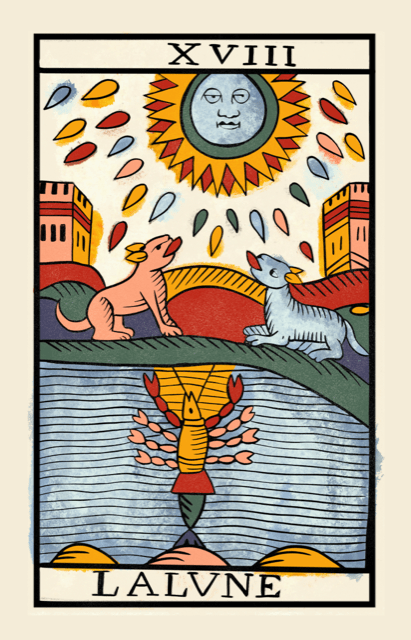
La Lune: Indistinct or incoherent auguries; a treacherous road fraught with illusion.
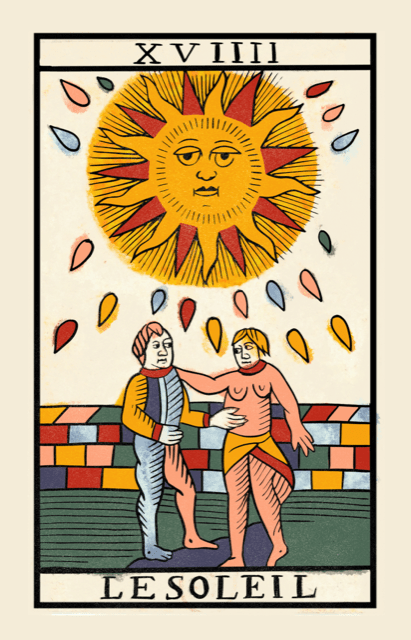
Le Soleil: Good tidings ripe with opportunity; an “endless summer;” intimations of success ahead.

Le Judgement: Being “called to account;” an “offer that can’t be refused,” leading to either transcendence or despair; eagerly “taking the bait” even though not coerced (i.e. “never buy a used car from a cross-eyed angel”). No turning back or second-guessing allowed.
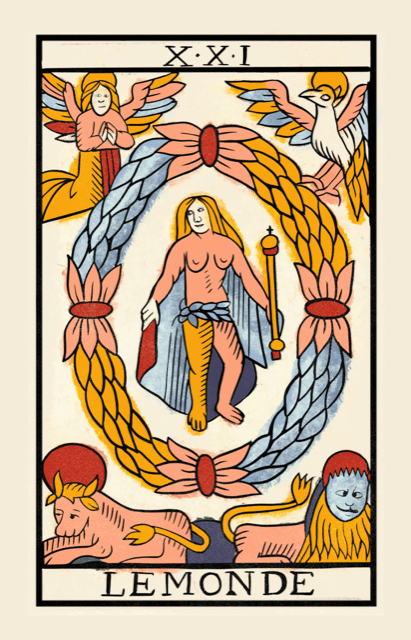
Le Monde: Completion and closure; a toss-up between “all’s well that ends well” and “nothing good will come of it,” with “the ends justify the means” in the middle.
 Parsifal's Wheel Tarot & Astrology
Thank you very much. Do you have any posts about the Minor Arcana of this deck? Thanks
LikeLike
I have a who;e series of Tarot de Marseille “thumbnails” for the pip cards in the TdM Category menu.
LikeLike
Pingback: The Maverick Cartomant, Part 2: Tarot de Marseille (TdM) | Parsifal's Wheel Tarot & Astrology